Dev Diary #13: Cally’s Caves 2 Postmortem

Well, it has now been about 75 days since we released Cally’s Caves 2, and we figured it was about time to write an article about our experience since the game came out.  If you missed it, we got an awesome PlayPressers Trailer, and some attention from some media.  It was all wonderful, but this article is about the stats so let’s just get right into it.

Downloads

Screenshot 2014-09-18 15.01.02

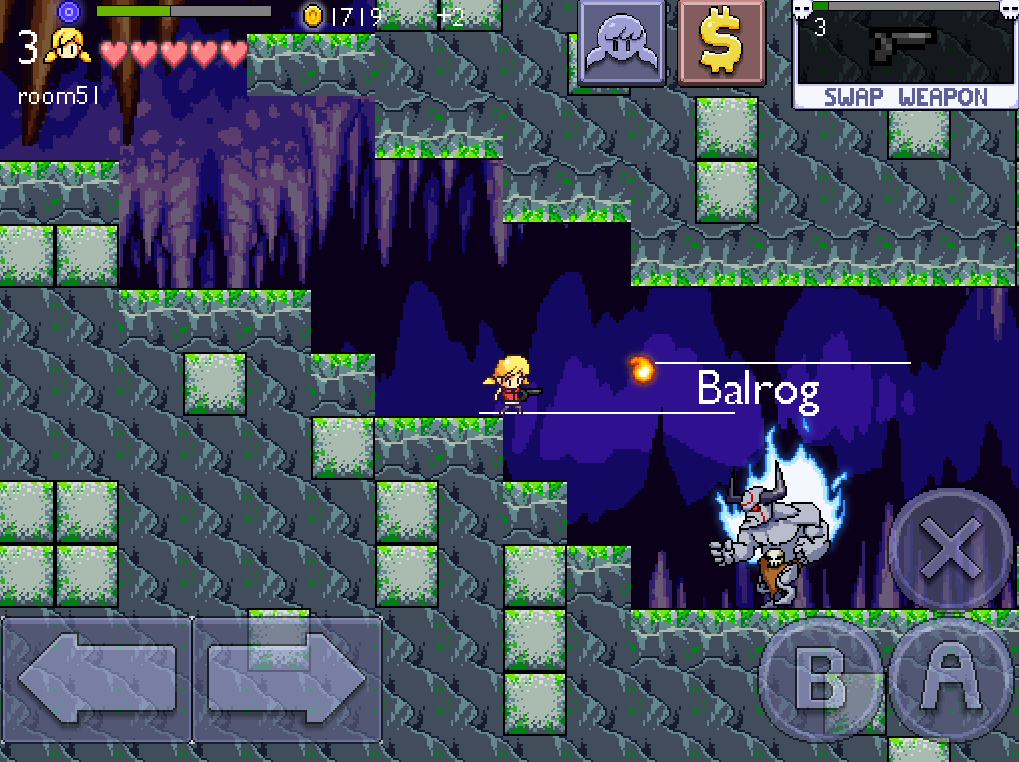
We currently have 131,000 free downloads after two and a half months.  It was way more than we expected to get, and our team feels incredibly lucky to have reached that many people.  To many game developers, 131,000 is nothing, especially considering that Cally’s Caves 2 is free game.  To us, however, it has far exceeded our highest hopes.  When we first started working on Cally 2, we set a lofty goal of getting a hundred thousand downloads to try and grow our name and build an audience.  It was the kind of goal you set because you know it’s so high you’ll never hit it, but the act of aiming for it will make your product better in the end.  The fact that we actually reached and exceeded it is a dream come true. Continue reading

Development Diary #12: Testing an iOS Application Using Gamemaker

Sorry about the lack of posts lately. We have finally submitted Cally’s Caves 2 to Apple for review, so we are going to try and get back to posting regularly!

Testing a game on an iOS device seems like it should be a simple process, but we learned the hard way that minor details can complicate things at any time. In this dev diary, we will outline the steps of our testing process using Gamemaker: Studio, in the hopes that it may help some people overcome the same complications that we faced.  This entry will be a bit technical and specific.

Note: We are using Gamemaker: Studio version 1.3.1344, and you will need access to a Mac.

Screenshot 2014-06-22 14.28.05

1) Get your code ready for mobile.

We were developing a game that uses touch controls, but convenience necessitated being able to test on PC as well. This led to us having 2 control methods, and needing to switch between them. When we needed to export an .ipa file (the file type for iOS applications), we would need to disable the pc controls. We also based our resolution coding for iOS based off of the “display_get_size()” function, but when testing on windows we would use “window_get_size()” for everything to work properly. So, before you export your .ipa file, make sure you have everything ready for the mobile version. Continue reading

Development Diary # 10: Implementing Feedback from the Beta

Sorry it’s been a while since our last update! It’s crunch time for Cally’s Caves 2, which means we are spending a ton of time polishing, bug fixing, and getting ready to submit to Apple. In our last post we detailed how we hoped our Beta test would go, and at this point we have wrapped up the testing phase.  It didn’t last the 8 weeks we planned on, it actually only took about 2 weeks to receive feedback from all of our testers.  We thought it would be a good time to discuss the feedback we received, and how we are using it to make our game a lot more user-friendly and fun.

Screenshot 2014-05-03 15.56.53

The Testers

We ended up having 15 people beta test Cally’s Caves 2, which doesn’t seem like a lot, but for an indie developer like us, it was a gold mine of useful information.  I put a post up on my personal Facebook and Twitter pages, and the testers all volunteered from there.  Of all the testers, only 2 people tested the game on iPad, 5 people used iPhone 5 or 5s, and the rest were on the older iPhone 4 or 4s models.  We were lucky to have a wide range of devices testing the game, and that’s mostly just due to luck with who signed up.  We also (as detailed in our pre-beta dev diary), sent out an introduction package and survey with the beta files, which most of the people filled out.  It also helped to have my phone near me, as testers would often text me the bugs, which I would then add to my to-do list.  We did have people report quite a few bugs, which was amazing because we may have never found them if we were testing the game ourselves. Continue reading

Development Diary #4 – On Level Design in a 2d Game

One of the greatest challenges developing Cally’s Caves 2 is how to go about designing 100 levels while keeping the game fresh.  Cally’s Caves had 27 levels, not including boss rooms or the challenge “subrooms.”  At the time, it seemed like a good idea to differentiate each level by the use of music, tile sets, and area names.  Every time you entered a new level, a new song would start playing, and every five levels the environment sprites would change.  While this worked to a certain degree, a large number of players played the first few levels and then gave up (either out of frustration at the difficulty, or just not enjoying the game).  This unfortunately led to a number of the levels and environment sets never being seen.  In retrospect, we may have been better off if we had changed the tile set every level and just rotated the four sets that we had.  Hindsight is 20/20, and having that hindsight doesn’t affect the product we already released.  It does, however, allow us to approach a sequel with the lessons we learned in mind.  Hopefully, using the lessons we learned, we can make the levels in Cally Caves 2 do a lot more for the player.


Level 3 of Cally's Caves
Level 3 of Cally’s Caves

Continue reading

Development Diary #3: Music Beginnings

I started working on the music for our second game before we knew we would be making a sequel to Cally’s Caves.  This is mostly due to the fact that I’ve always been into making music using Propellerheads’ Reason software, as well as playing guitar and piano in my spare time.  In the lull between games, I knew I could be productive by just making some songs and experimenting with different sounds and chord progression ideas.  I was proud of the music from Cally’s Caves and wanted to continue to make tracks since I find it very creatively satisfying, even if my ears are the only ones hearing it.

Image

The general feel of the soundtrack in Cally’s Caves was not exactly coherent, it was a melange of upbeat, hyper tracks, and ambient, atmospheric ones.  I liked the way the music evoked different moods in the different levels, but I know I can do better this time around, and give the soundtrack more of a coherent feel.  That being said, my musical process remains the same, and it always begins with a guitar or piano.

(note – this diary links to my soundcloud for the tracks I’m writing about, since WordPress doesn’t like audio files)

https://soundcloud.com/jordan-pearson-10/cally-2-lloyds-theme

“Lloyd’s Theme” was one of the first tracks I composed for Cally 2, and I came up with the idea while noodling on my guitar.  I eventually came up with the verse and chorus riffs, which are incredibly simple (and not very well-played in the recording).  Lloyd is a character that helps Cally learn the systems of the game, and appears at many different points throughout Cally 2.  He’s always sitting there, playing guitar, and I wanted a guitar-based theme to play every time he shows up, so the player hears it and knows a tutorial is sure to follow, a Pavlov’s dog kind of situation.  After recording the acoustic bits, I fed them into reason, sequenced them, and created a simple drumbeat, bassline, and synth melody to round out the track.  It’s very simple, but that’s the feel I was going for, and I hope that it will come across like Lloyd is playing the guitar in the final product. Continue reading

Development Diary #2: Art Style

The art in Cally’s Caves was done entirely by my good friend Dave in an open-source pixel art editor called Aseprite.  Well we were very happy with the art as a first effort – Dave taught himself how to do it in just a few short months – there’s always room for improvement, and some of our reviews commented on the art in a not-so-positive way.  I know that with Cally 2 it is incredibly important to have the art be amazing, and comparable to the best art on any iOS game, in order to have the best chance at success.  Things evolved naturally when Dave moved to a different city and let me know that he probably wouldn’t have enough time to do the art on another game (he will be staying on in a design/level editor capacity).

New Icon 144x144

I posted on the TIGsource forums about looking for a pixel artist for Cally’s Caves 2, linking the first game and hoping and praying someone would answer and want to collaborate with me on the game.  Enter Pablo, an artist who emailed me asking if the position was open and sending me a portfolio of some of his work.  I instantly jumped at the opportunity, recognizing his work as exactly what I was looking for.  The first actual work he sent me for Cally’s Caves 2 was this promo image, which you may have seen before on this blog:

Image

Continue reading

Development Diary #1: Making a Sequel

I’ve decided to write a weekly development diary about the process of making Cally’s Caves 2.  I’m doing it mostly as a design tool to help me reflect upon decisions I’ve made while designing the game, with the hope that it will help me think about the ideas from another perspective and help me create the best game I possibly can.  So it’s a personal tool, but if you read it and enjoy it, it certainly can’t hurt!  To begin, here’s a bit of background:

Image

In June 2013, having quit my day job, I decided to try and make a video game with my good friend Dave.  The main barrier we faced in this venture was that neither of us had any experience in game design.  Sure, I had programmed some little bits of software on my Commodore 64 as a kid, but nothing resembling a full game, and that was 20 years ago.  Inspired by the likes of Tom Francis and Steve Gaynor, who both made amazing independent games (Gaynor had experience but left a big company to make a solo game, and Francis had no experience but kept his day job and learned how to do it at night), I enlisted Dave and we set out on the path.  By October we had finished Cally’s Caves, and released it on the iOS Appstore.  There’s no need to get into the thought process behind the design decisions we made here, but since its release we’ve had 7000 downloads and although we didn’t make any money, it was a personal success for us both – we proved to ourselves that we could ship a game.

Image

Continue reading